
Ideological Priors Inventory

A multidimensional tool for understanding worldviews
The Ideological Priors Inventory is an innovative survey instrument that maps the deep beliefs and values shaping how people navigate the world. Originally introduced by Thomas Homer-Dixon in his 2020 book Commanding Hope, the Ideological Priors Inventory is a practical 16-item survey tool developed in collaboration with the Canadian polling firm Environics and tested across Canada and the United States.
Unlike traditional ideology measures that reduce complex beliefs to simple Left-Right categories, the Ideological Priors Inventory reveals worldviews across multiple dimensions—including Order-Chaos, Hierarchy-Equality, Tradition-Innovation, and Individualism-Collectivism.
By placing individuals and groups in this multidimensional "ideological state space," the Ideological Priors Inventory makes it possible to visualize how worldviews differ across communities.
We believe that such analysis could expose unexpected areas of similarity or conflict, and identify entirely new worldviews that are better aligned with a more resilient and hopeful world.
This instrument has broad potential applications: helping organizations engage constructively across ideological divides, enabling conflict-sensitive communication, supporting democratic dialogue, and providing researchers with a more nuanced understanding of how core beliefs connect to attitudes and behaviours on complex policy issues.
An innovative method of "weighing" opinions
Participants complete each question in the Ideological Priors Inventory using a “Weighing Up” format — an ergonomic, balance-scale analogy that captures the relative strength of a respondent's agreement with two opposing statements.

Onscreen, two belief statements are displayed on the left and right, alongside an illustration of two hands and a set of movable “weights.”
Participants indicate how strongly they endorse each side by clicking and dragging weights into the left or right hand; adding more weights to a side represents stronger agreement with that statement. The relative position of the hands will change as more weights are added or removed.
The interface allows participants to move and re-move weights (i.e., adjust iteratively) until the distribution feels accurate, effectively “balancing” the two positions.
A small onscreen key translates the number of weights into response intensity:
- 3 weights = strong agreement
- 2 = moderate
- 1 = slight
- 0 = no agreement/disagreement/no opinion.
Ideological Priors and the Energy Transition
The Cascade Institute is currently applying the Ideological Priors Inventory to understand how worldviews shape public responses to the shift to clean energy amid escalating climate risks. By examining how the Ideological Priors Inventory's core belief dimensions relate to real-world energy decisions—from the permitting of geothermal and wind projects to the upgrading of grid infrastructure—this project provides practical guidance for communities, energy planners, and policymakers seeking to accelerate the transition while reducing polarization.
The project is producing peer-reviewed research, an interactive web demonstration tool, and practical briefings that show how to align energy initiatives with community values, identify potential flashpoints before they escalate, and engage more effectively across ideological differences.
By understanding not just what people believe but how their worldviews are structured, the Ideological Priors Inventory helps navigate the ideological dimensions of energy transition with greater insight and less conflict.
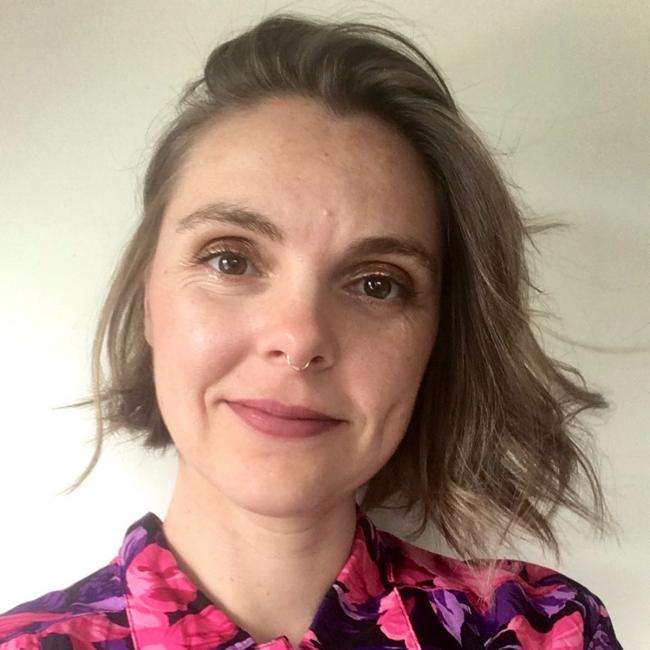
Dr. Shandell Houlden
Dr. Shandell Houlden is a researcher with the Democracy program. Her work focuses on how polarization intersects with energy transformation and climate change, with attention to governance, communication, and public trust. She holds a PhD in English and Cultural Studies from McMaster University and has published widely on the intersections of power, technology, and education in the digital age.
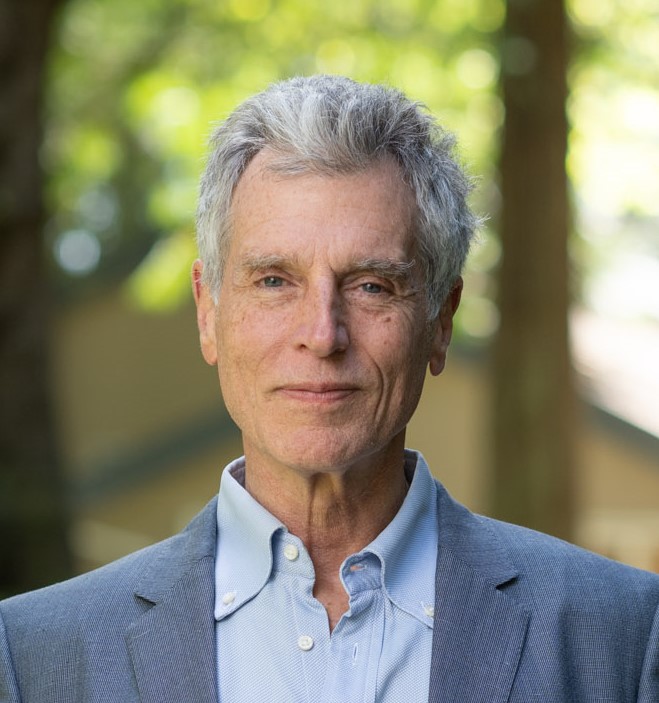
Dr. Thomas Homer-Dixon
Thomas Homer-Dixon’s research focuses on threats to global security in the 21st century, including economic instability, climate change, and energy scarcity. He also studies how people, organizations, and societies can better resolve their conflicts and innovate in response to complex problems. He holds a PhD from MIT in international relations, defense and arms control policy, and conflict theory.

This research is supported by the Accelerating Community Energy Transformation initiative, to which the Cascade Institute brings system theory analysis and complex problem-solving experience to the challenge of unlocking high-leverage interventions.
Related Research & Analysis

Together for Sooke
Scale-up & Acceleration program
Shandell Houlden, Seth Elza
What Sooke residents said about their community, and what could come next, from the “Together for Sooke” community dialogue pilot.
Listening Across Difference
Scale-up & Acceleration program
Shandell Houlden, Seth Elza
Lessons for governance, planning, and civic engagement gleaned from the "Together for Sooke" pilot project.
AI and Data Centre Risks for Canadian Financial Institutions
Polycrisis program
Christopher Collins
An integrated assessments of how artificial intelligence and the physical infrastructure behind it are reshaping risk for Canadian financial institutions.
National Service to Support Community and National Security: A preliminary outline of components, implementation, and costs
Democracy program
David Last
A policy brief prepared for the Office of the Prime Minister for the development of a National Service initiative.
Defending Canada’s Democracy
Democracy program
Cascade Institute fellows and staff
A strategic framework for building Canada's economic and social resilience.
Catastrophic Dehumanization: A formal model
Democracy program
Thomas Homer-Dixon
A formal model that seeks to explain the causal mechanisms of sudden dehumanization in situations of extreme conflict.Related News & Views

How stiff is Canada’s spine? A poll suggests we may be ready to sustain the costs of our newfound defiance
Thomas Homer-Dixon and Toby Shannan
The Globe and Mail
Polling data shows most Canadians across the political spectrum are rallying round the Maple Leaf.

Donald Trump’s chaotic mess: When U.S. power serves the ‘sultan,’ global rules erode
Christopher Collins
The Conversation
How the U.S. engages the wider world could be termed “sultanism with American characteristics.”

Europe Needs to Get Serious About Its Defense. A New Bank Is the Answer.
Christopher Collins and Mike O'Sullivan
Barron's
Europe’s current defense financing tools fall short, and a new multilateral bank could unlock capital to strengthen its military readiness.

Punishing young Canadians for leaving doesn’t solve the problem
Christopher Collins
The Globe and Mail
Canada shouldn’t try to stop young talent from leaving, but instead build a stronger economy that attracts them to stay or return.

Cascade researchers warn of “bad-to-worse” crises in The New Republic
Thomas Homer-Dixon and Christopher Collins
The New Republic
The knock-on effects from the Iran war are intersecting with other crises and destabilizing the world. The worst may be yet to come.

Can neuroscience shed light on Trump’s new world disorder?
Megan Shipman and David Mitchell
The Globe and Mail
American military aggression is now driven by Donald Trump’s hunt for dopamine rewards, conditioned by recent high-stakes military strikes on Iran and Venezuela.

The Guardian cites Thomas Homer-Dixon as fears resurface of U.S. coercion against Canada
Thomas Homer-Dixon
The Guardian
The Guardian drew on the perspectives of Thomas Homer-Dixon to make sense of renewed Canadian anxieties about U.S. coercion and the sudden fragility of longstanding geopolitical alliances.
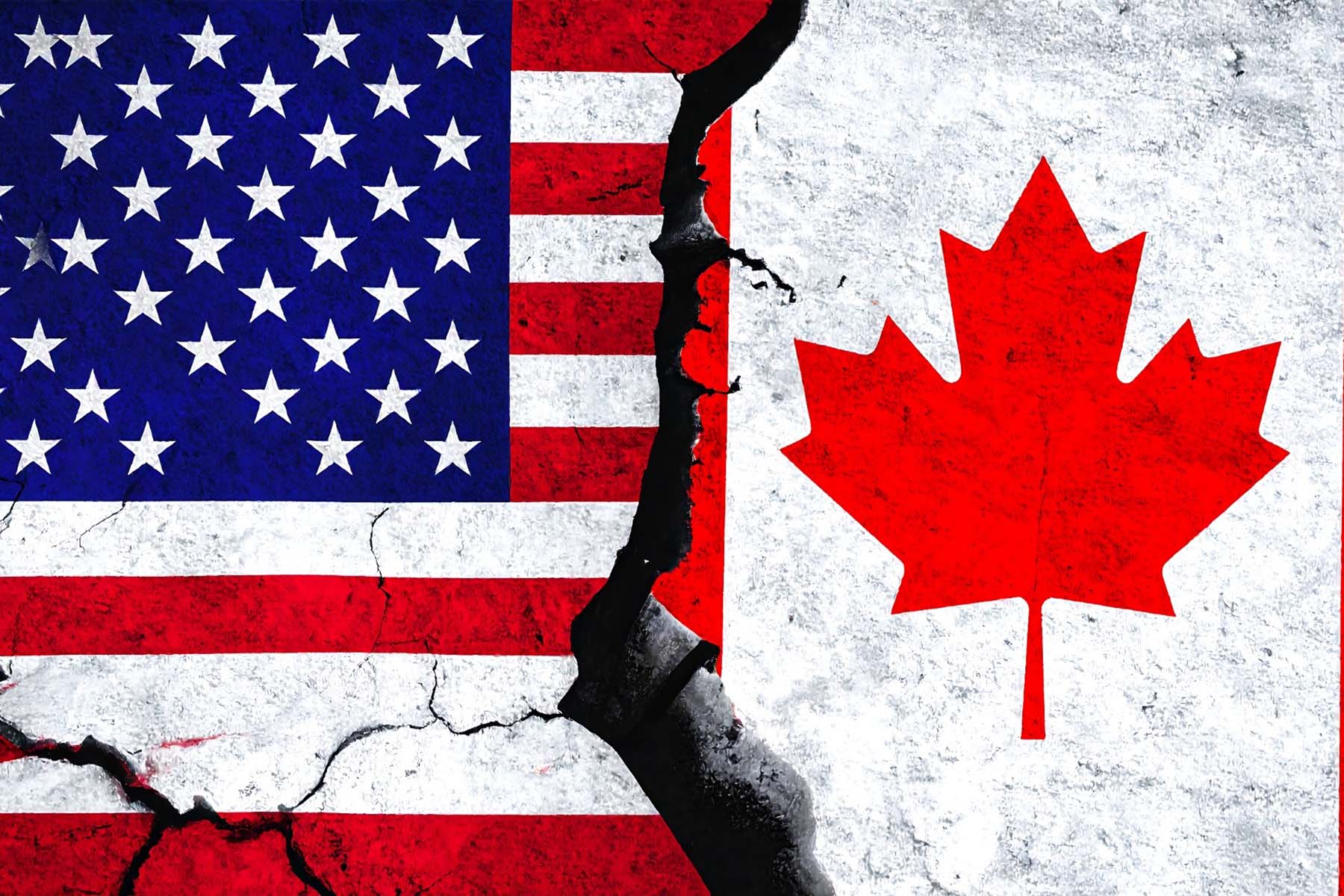
Canada must consider the risk of U.S. coercion
Thomas Homer-Dixon and Adam Gordon
The Globe and Mail
Canadians must confront the new reality that the U.S. could use military coercion against Canada, argues a Globe and Mail op-ed co-authored by Cascade Institute Executive Director Thomas Homer-Dixon and Adam Gordon, an affiliated Cascade researcher and former legal adviser to Canada’s Minister of Foreign Affairs.

Would you die for Canada? Polling suggests Canadians are more willing to fight for their country
Thomas Homer-Dixon and Toby Shannan
The Globe and Mail
Polling data shows most Canadians are willing to fight to defend their country against military attack.

Anti-democratic ‘Dark Enlightenment’ ideas have spread from Silicon Valley to Washington
Christopher Collins
The Globe and Mail
A spotlight on the growing influence of the anti-democratic 'Dark Enlightenment' philosophy among U.S. tech and political elites and its potential consequences for Canada.

It’s time to create a new national service
David Last and Thomas Homer-Dixon
Toronto Star
New and voluntary national service programs are needed to defend Canadian sovereignty.
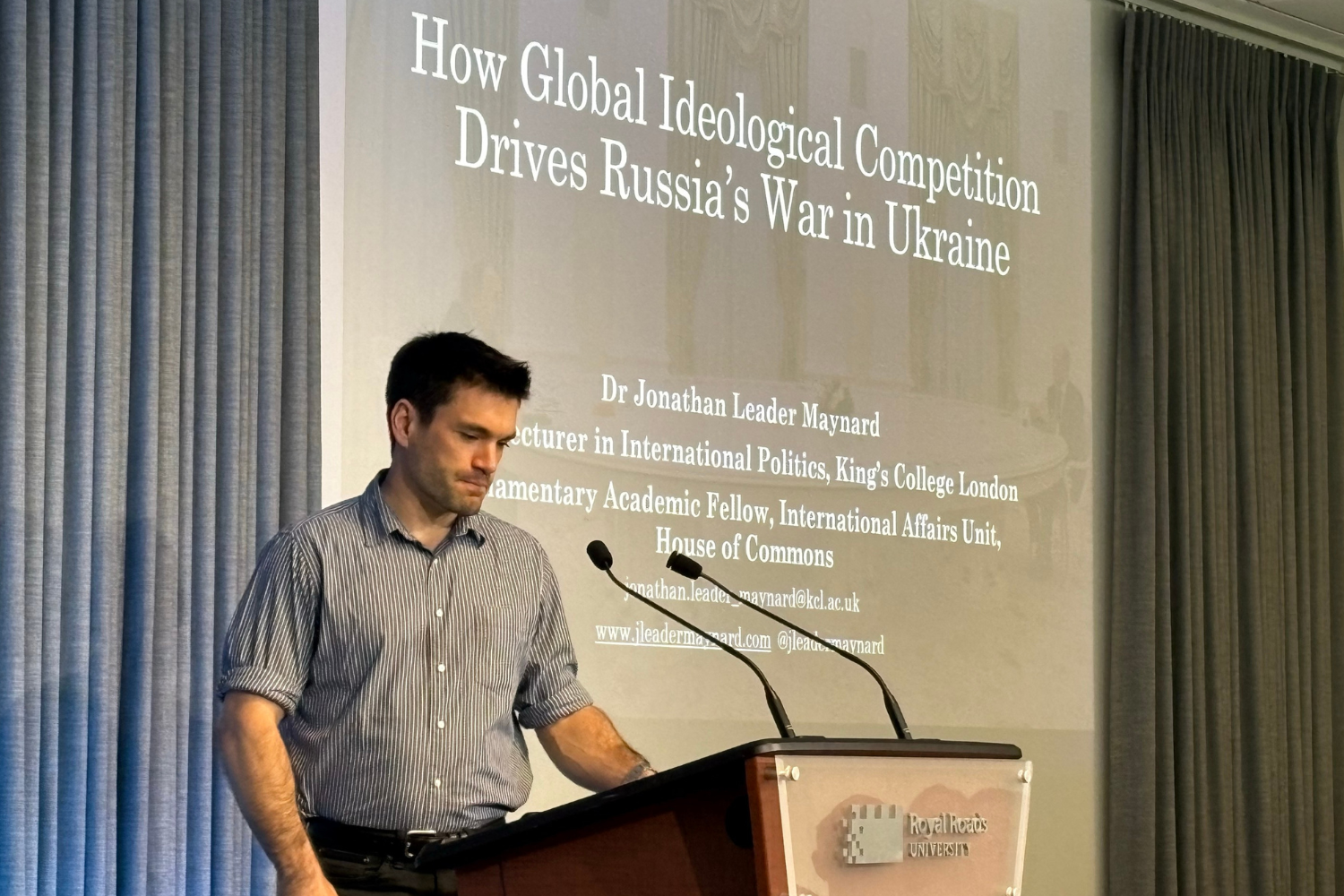
Understanding the ideological drivers of Russia’s war in Ukraine
Jonathan Leader Maynard
Cascade Institute Speaker Series
The critical role of ideology in Russia's war against Ukraine.

On disinformation: A conversation between the Cascade Institute’s Thomas Homer-Dixon and James Hoggan of the David Suzuki Institute
Thomas Homer-Dixon
David Suzuki Institute interview
How information overload in digital spaces fuels negativity and division.
How stiff is Canada’s spine? A poll suggests we may be ready to sustain the costs of our newfound defiance
Thomas Homer-Dixon and Toby Shannan
The Globe and Mail
Polling data shows most Canadians across the political spectrum are rallying round the Maple Leaf.
Donald Trump’s chaotic mess: When U.S. power serves the ‘sultan,’ global rules erode
Christopher Collins
The Conversation
How the U.S. engages the wider world could be termed “sultanism with American characteristics.”
Europe Needs to Get Serious About Its Defense. A New Bank Is the Answer.
Christopher Collins and Mike O'Sullivan
Barron's
Europe’s current defense financing tools fall short, and a new multilateral bank could unlock capital to strengthen its military readiness.
Punishing young Canadians for leaving doesn’t solve the problem
Christopher Collins
The Globe and Mail
Canada shouldn’t try to stop young talent from leaving, but instead build a stronger economy that attracts them to stay or return.
Cascade researchers warn of “bad-to-worse” crises in The New Republic
Thomas Homer-Dixon and Christopher Collins
The New Republic
The knock-on effects from the Iran war are intersecting with other crises and destabilizing the world. The worst may be yet to come.
Can neuroscience shed light on Trump’s new world disorder?
Megan Shipman and David Mitchell
The Globe and Mail
American military aggression is now driven by Donald Trump’s hunt for dopamine rewards, conditioned by recent high-stakes military strikes on Iran and Venezuela.
The Guardian cites Thomas Homer-Dixon as fears resurface of U.S. coercion against Canada
Thomas Homer-Dixon
The Guardian
The Guardian drew on the perspectives of Thomas Homer-Dixon to make sense of renewed Canadian anxieties about U.S. coercion and the sudden fragility of longstanding geopolitical alliances.
Canada must consider the risk of U.S. coercion
Thomas Homer-Dixon and Adam Gordon
The Globe and Mail
Canadians must confront the new reality that the U.S. could use military coercion against Canada, argues a Globe and Mail op-ed co-authored by Cascade Institute Executive Director Thomas Homer-Dixon and Adam Gordon, an affiliated Cascade researcher and former legal adviser to Canada’s Minister of Foreign Affairs.
Would you die for Canada? Polling suggests Canadians are more willing to fight for their country
Thomas Homer-Dixon and Toby Shannan
The Globe and Mail
Polling data shows most Canadians are willing to fight to defend their country against military attack.
Anti-democratic ‘Dark Enlightenment’ ideas have spread from Silicon Valley to Washington
Christopher Collins
The Globe and Mail
A spotlight on the growing influence of the anti-democratic 'Dark Enlightenment' philosophy among U.S. tech and political elites and its potential consequences for Canada.
It’s time to create a new national service
David Last and Thomas Homer-Dixon
Toronto Star
New and voluntary national service programs are needed to defend Canadian sovereignty.
Understanding the ideological drivers of Russia’s war in Ukraine
Jonathan Leader Maynard
Cascade Institute Speaker Series
The critical role of ideology in Russia's war against Ukraine.
On disinformation: A conversation between the Cascade Institute’s Thomas Homer-Dixon and James Hoggan of the David Suzuki Institute
Thomas Homer-Dixon
David Suzuki Institute interview
How information overload in digital spaces fuels negativity and division.
