
Ask 2,000 Canadians what they think about geothermal energy, and most will answer with a shrug.
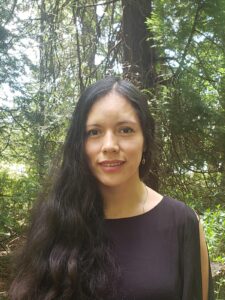
That shrug is loaded with meaning to Katherine Matos Meza, a Cascade Institute researcher studying public perceptions of geothermal.
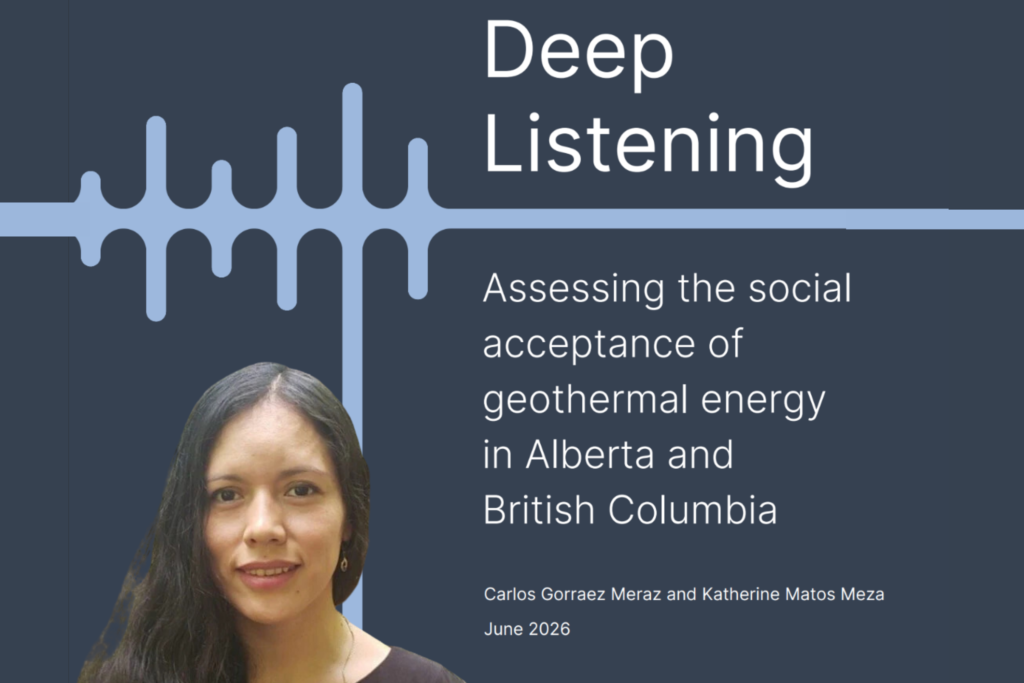
When she and Carlos Gorraez Meraz, a collaborator at Royal Roads University, recently asked 2,603 people in western Canada to share their impressions of the clean-energy option, the predominant response was a vague, fuzzy familiarity.
That’s both good news and bad news, according to the new report they co-authored, Deep Listening: Assessing the social acceptance of geothermal energy in Alberta and British Columbia.
“Public perceptions around geothermal are still forming,” says Matos Meza. “That’s a great opportunity to engage people, to educate them, to help them understand the important role geothermal energy could play in ensuring clean, secure, and affordable electricity for Canadians.”
Recent advances have made geothermal energy — clean, inexhaustible power extracted from hot rock kilometres below the surface — a powerful addition to the mix of technologies like wind and solar.
But of all the energy sources Matos Meza asked about in a survey of Albertans and British Columbians last year, geothermal had the lowest familiarity. Acceptance is moderate and opinions are soft. People have not yet decided what to make of geothermal because, in general, they’ve barely heard of it.
For Matos Meza, that gap in understanding is simultaneously a big opportunity and a flashing red warning.
“Right now, they’re subject to misinformation, or to other actors who might give them negative insights.”
Matos Meza contributes research to all of Cascade’s programs — geothermal, polycrisis, democracy — thanks to her background in stakeholder mapping, survey design, and environmental impact assessment. She has worked in both the public and private sectors, and holds a master’s degree in Environment and Management from Royal Roads University. She also built the data behind the Polycrisis Community Map, which links researchers working on the world’s interlocking crises. Her study of public acceptance of geothermal is aimed at helping entrepreneurs, policymakers, and communities realize the environmental, financial, and social benefits of the technology.
Matos Meza says the key finding of her research is that there’s still time to positively shape public perceptions of geothermal, whereas perceptions of other energy forms are tougher to budge.
A second part of the research, currently ongoing, includes qualitative analysis of the survey’s open-ended question about perceived risk. Open-ended questions like these are about more than tallying yes and no answers, says Matos Meza.
“From there we can identify information gaps, emotional threats, technical concerns, structural distrust. And we can do it at an early stage, before concerns harden into positions.”
This is where Matos Meza’s work plugs into Cascade’s overarching mission. The Institute sees geothermal energy as a “high-leverage intervention” to address the polycrisis — a single push that can simultaneously address climate heating, energy insecurity, and economic inequalities.
Matos Meza understands that technological transitions are also social ones. Without social acceptance, the advancement of this promising but underdeveloped clean energy resource could stall. With strong social acceptance, geothermal can be part of the positive snowball effect the Cascade Institute calls a virtuous cascade.
“Perceptions are evolving fast,” she says. “The sooner people are introduced to the benefits of geothermal energy, the better.”
That’s why she believes we need to investigate social acceptance now, while the ground for growing public perceptions is still fertile: “My goal is to understand the forces shaping social acceptance of geothermal well enough that we can actually address them through effective and transparent communication.”
