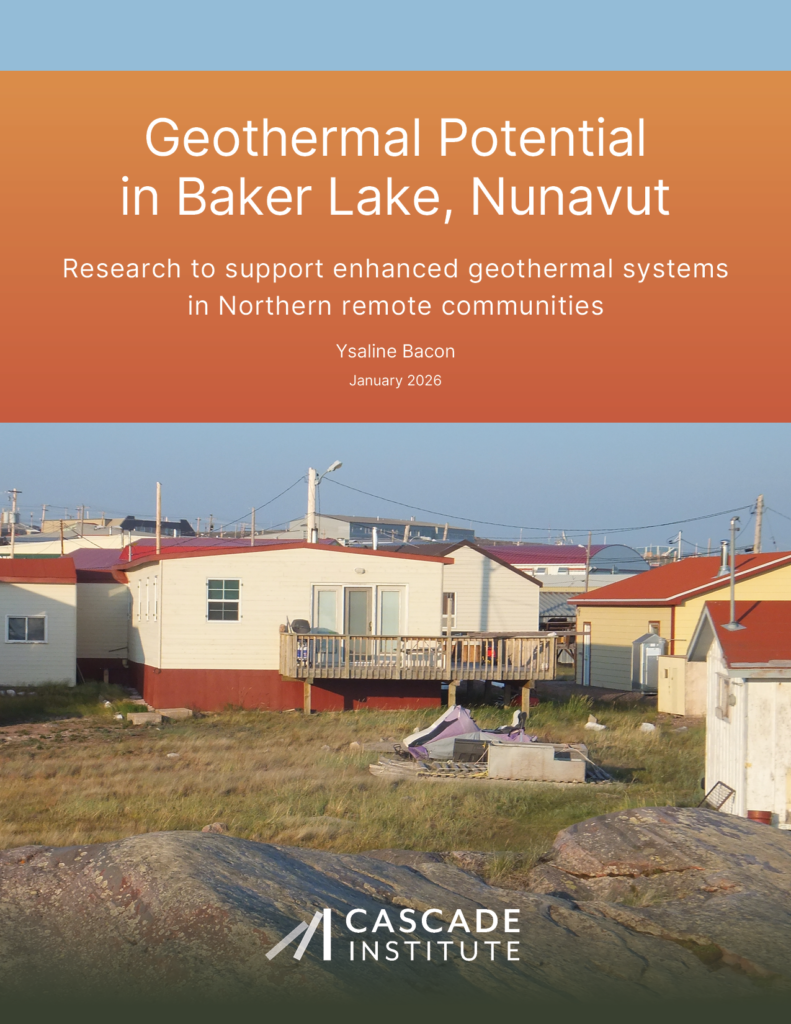
This report explores the transformative potential of geothermal energy as a secure and sustainable replacement for diesel and heating oil in Baker Lake, Nunavut.
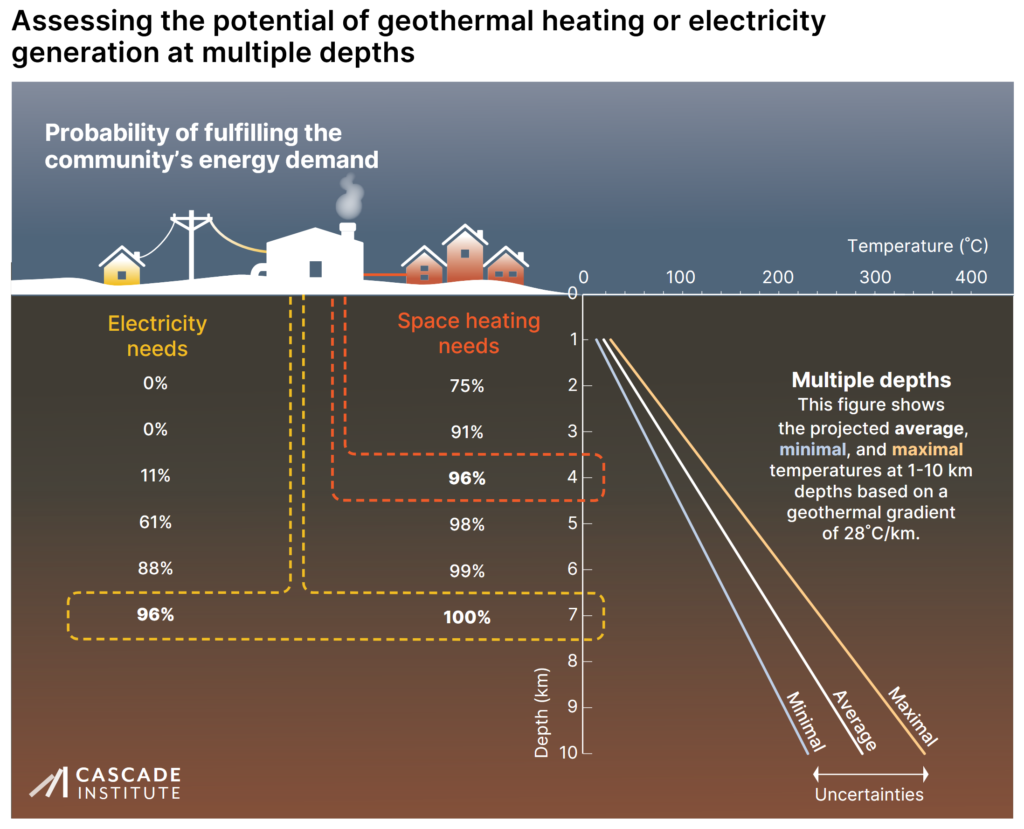
By analyzing new borehole data, the study suggests a geothermal gradient of 28°C/km—substantially higher than previously thought—offering Baker Lake a new pathway toward energy sovereignty. The findings suggest that deep geothermal systems could provide reliable district heating at 4 km depth, or even full community electricity generation if drilling reaches 7-8 km.
Central to this transition is a model of Inuit-led community development that prioritizes local ownership, long-term employment, and the reinvestment of energy benefits. By combining technical feasibility with a commitment to Inuit societal values, this research suggests that Baker Lake could lead the North in a fair and self-determined clean energy transition.
The study also demonstrates that probabilistic resource assessment can serve as not only a technical exercise but a strategic decision-making tool. By quantifying uncertainty and expressing resource potential in terms of likelihood rather than fixed values, communities, governments, and investors gain a clearer understanding of risk and opportunity. This approach equips community leaders and project partners to make informed choices about whether to proceed with exploratory drilling, invest in district heating infrastructure, or allocate funding for ultra-deep projects.
Key findings
-
Higher heat, deeper hope: New analysis suggests that Baker Lake’s geothermal gradient is 40% higher than previously expected for the region. This isn’t just a marginal improvement—it’s a game changer that makes a deep geothermal system a realistic possibility where it was once thought unlikely.
-
Heating homes, protecting the land: By tapping into geothermal heat at just 4 km, Baker Lake could develop a district heating system that doesn’t rely on costly and polluting fuel imports. This would drastically reduce the risk of fuel spills while providing stable, clean heat to homes and businesses.
-
A full-scale diesel replacement: Unlike other renewables, geothermal can provide baseload power and heat in extreme environments—day and night, summer and winter. This report shows that by reaching a depth of 7 or 8 kilometres, the community could potentially generate enough electricity to power itself completely, offering a permanent exit from diesel reliance and its associated price volatility as well as environmental and supply risks.
-
Energy sovereignty through Inuit leadership: This transition is about more than just technology; it’s about power in every sense. The report frames geothermal development as a path to energy independence through Inuit ownership, ensuring that the benefits—jobs, infrastructure, and revenue—stay within the community.
-
A blueprint for Arctic clean energy: Baker Lake can serve as an Arctic energy-transition lighthouse. Success here provides a technical and social roadmap for other remote Arctic communities to harness the Earth’s natural heat to power their own clean energy transitions.