
Building the
Future of Sooke
Together
Building the Future of Sooke Together
New report
Listening Across Difference
A community dialogue pilot for navigating polarization
In the fall of 2025, Together for Sooke tested whether a structured facilitation method called presencing could support more productive civic conversation in a community navigating rapid growth, climate planning, and local conflict. Working with Fireweed Learning Commons and funded by the ACET initiative, facilitators convened six small-group dialogues with Sooke residents over three weeks.
- In small facilitated groups, the method produced a different kind of conversation — residents described their lives openly, named what they value and fear, and found shared aspirations even on contested issues.
- Surveys confirmed real affective polarization on climate questions, alongside markedly more trust in fellow residents than in local government.
- A single 75-minute session did not measurably reduce that polarization. Presencing deepens with repeated practice, and the relational trust it depends on does not form in one encounter.
- The sample skewed politically: of participants who reported a federal vote, none had voted Conservative, in a district where 37 percent did. That leaves the central question open.
- The report closes with a full facilitation guide for practitioners who want to adapt the method in their own communities.
Community brief
Together for Sooke
What we did, what we heard, and what could come next
A short companion to the full report, written for the Sooke community. It shares the 10 themes that surfaced in the conversations, from the “one road in, one road out” bottleneck to the gap between “Sooke online” and “Sooke in real life,” and five directions residents proposed for living with disagreement and navigating change together.
How can we move forward as a community-even when we don't all agree?
This project explores that question by creating space for deeper listening, respectful dialogue, and collective visioning in Sooke.
How can we move forward as a community-even when we don't all agree? This project explores that question by creating space for deeper listening, respectful dialogue, and collective visioning in Sooke.
At a time when many communities are struggling with division, the Cascade Institute is piloting a new way to strengthen democracy from the ground up. Working in collaboration with local education non-profit Fireweed Learning Commons, this initiative supports inclusive public dialogue around Sooke's future-especially in the context of climate and energy transition, land use, and community development.
Through a combination of surveys, small-group conversations, and new digital tools, we're inviting residents to share their hopes, questions, and concerns-then building bridges between diverse perspectives.
This pilot is one of the first of its kind in Canada, and could help other communities facing similar challenges.

Community listening campaign
Using Cortico.AI, a tool developed by MIT, we'll identify key themes, concerns, and stories from residents about climate, land use, and community wellbeing.

Facilitated dialogue sessions
Large, cross-group online sessions-hosted via Frankly, developed by the Harvard Kennedy School-will bring people together for structured, inclusive conversations.

Synthesis and feedback
What we learn will be documented and shared with the community and decision makers, helping to build more responsive institutions and reinforce trust through transparent, participatory planning.
Why it matters
Climate and energy transitions are reshaping how we live, move, and plan for the future. These changes can spark tension-but they can also be moments of possibility. This project is about ensuring that everyone in Sooke has a voice in that future.
By reducing polarization and enabling respectful civic dialogue, we're working to:
- Support shared understanding and reduce conflict
- Create space for underrepresented voices
- Strengthen trust between residents and institutions
- Help shape community-driven solutions to complex challenges
Partners
Shandell Houlden, Project Lead
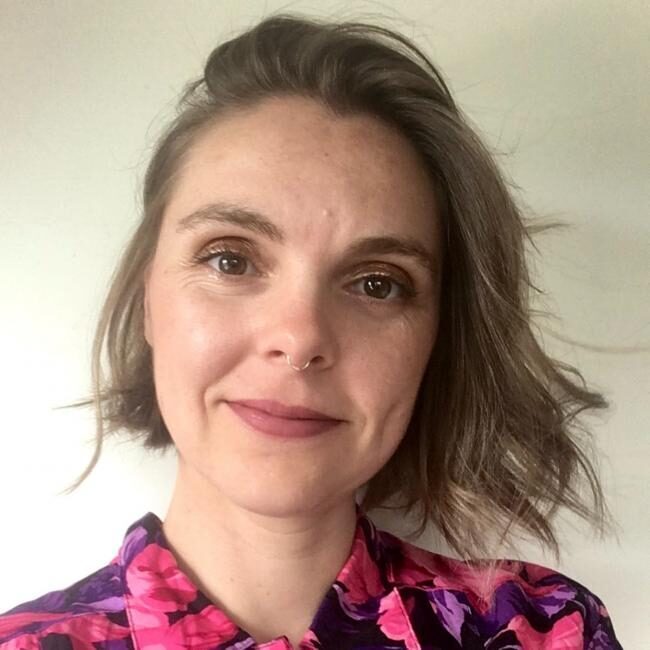
Shandell Houlden is a researcher and educator who has called the Sooke area her home for over a decade. As a research fellow at the Cascade Institute, she specializes in media literacy, climate communication, and democratic engagement. She's also a member of Fireweed Learning Commons, drawing on years of experience designing community-based research and participatory learning initiatives. Learn more

The Cascade Institute is a Canadian research centre focused on solving complex global challenges through strategic interventions. Based at Royal Roads University, the Institute brings cutting-edge tools and systems thinking to support transformative policy and practice.

Fireweed Learning Commons is a nonprofit organization dedicated to community-rooted education for a just and regenerative future. They specialize in dialogue, deep listening, and participatory methods that support collective learning and local resilience.
This project is supported by ACET-the Accelerating Community Energy Transformation initiative, based at the University of Victoria. ACET works with communities across B.C. to advance just, locally driven energy transitions that respond to the climate crisis. By supporting innovative civic engagement projects like this one, ACET helps ensure that energy and climate planning is shaped by the people it most affects. Learn more
Tools

Cortico is a nonprofit organization developed in partnership with MIT's Media Lab. Their AI-powered platform helps surface meaningful community stories and patterns by analyzing recorded conversations. In this project, we use Cortico to better understand what matters most to people in Sooke-what they're feeling, fearing, hoping for, and how they talk about it.

Frankly is a digital dialogue platform created with support from Harvard Kennedy School. It's designed to host small-group conversations that promote trust, reflection, and mutual understanding. In this project, Frankly allows us to facilitate respectful discussions-both online and in person-and to track emerging themes without reducing people's experiences to simple opinions.
