
By Christopher Collins, Cascade Institute Fellow
The version of record of this op-ed appeared in The Globe and Mail.
When it first launched in 2014, the online investment-management service Wealthsimple was all about patience. Its motto, “get rich slowly,” aligned with its offering of low-cost automated index investing. Put your money in a diversified portfolio, the promise went, then ignore the noise, and let compounding do its quiet work over decades. A rebuke to the day-trading, stock-picking machismo of Bay Street, this service offered Canadians a responsible way to build financial security.
How times have changed.
In June, the company announced Wealthsimple Predict, an app built in partnership with the U.S. prediction-market exchange Kalshi. Want to bet on the weather, the housing market or other world events? Soon, Canadians can buy a yes-or-no contract and hope you’re right. Regulators have kept sports and elections off the menu, and Wealthsimple promises education and guardrails. But clearly this is a betting product, wrapped in the language of financial markets, sold by a company that once told Canadians that gambling on the markets was the problem.
South of the border, prediction markets like Kalshi and rival Polymarket are booming, while also raising concerns about oversight and insider trading. In May, a U.S. congressional committee opened an insider-trading probe into both Kalshi and Polymarket. In late July, New York sued Kalshi, accusing the platform of violating state gambling laws.
But beyond these regulatory issues, the evidence on who wins in these markets should give aspiring bettors pause. Recent analysis by Bloomberg found that most traders on Polymarket lose money, and many of the winners are apparently automated bots. Similar research co-authored by Charles Martineau at the University of Toronto found that roughly 69 per cent of Polymarket traders lost money, with the top one per cent of accounts capturing over three-quarters of all profits. Furthermore, “suspicious” trades are growing, as is evidence that some may be manipulating bets.
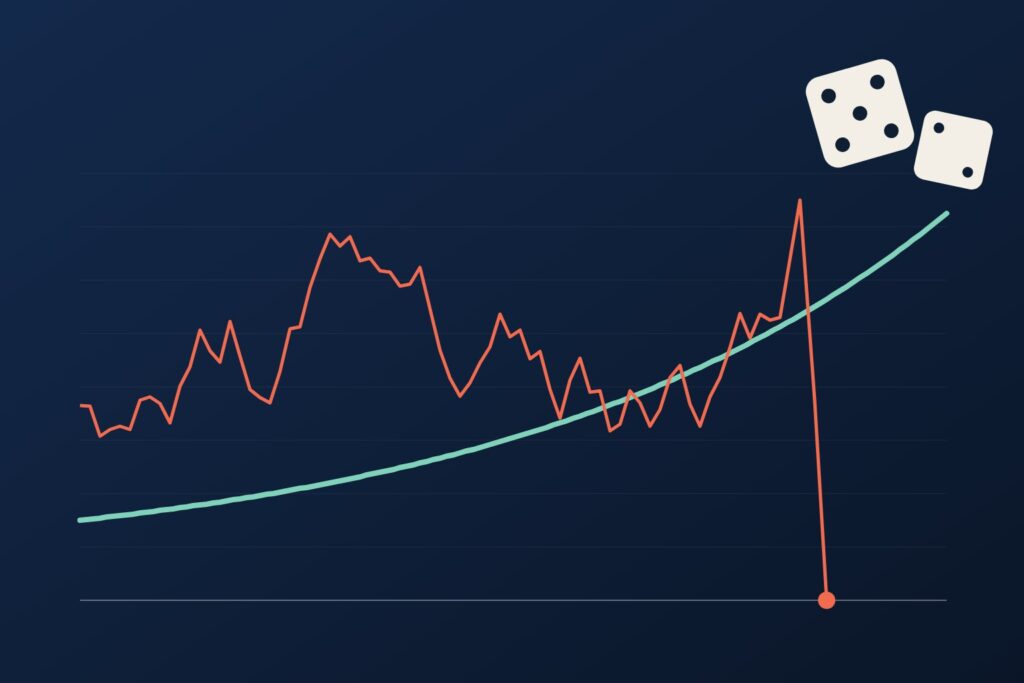
As is the case in many other parts of the financial market, sophisticated players have a major edge in prediction markets. But they are zero-sum: every dollar that a hedge fund’s algorithm wins is a dollar someone’s nephew loses. And unlike a bad stock, a wrong contract doesn’t dip – it goes to zero.
Prediction markets are not Wealthsimple’s first drift from its founding ethos. For several years now, the company that originally preached passive index funds has offered options trading, another area where retail investors lose big. It also lets users trade cryptocurrency “memecoins” and futures contracts. It’s a free country, and people can do what they want with their money, but no one is going to get rich slowly buying Fartcoin or speculating on soy futures.
But from a business perspective, Wealthsimple’s offerings make sense: they are responding to demand. And this demand is the real story. So we should be asking: Why are so many young Canadians interested in gambling their money away?
One major driver is the fact that the traditional economic model is breaking down. When young people see a terrible labour market, economic policies designed to prioritize baby boomers, decreasing economic mobility and dysfunctional housing market, gambling may feel like a rational response. If saving $500 a month will never buy you a home in Toronto or Vancouver, a lottery-ticket logic can take hold: If the slow path leads nowhere, why not take the fast one, even at terrible odds? This pursuit of greater risk in the name of possible asymmetric upside has led to a dynamic that writer Kyla Scanlon has called “financial nihilism.”
In Canada, we’re increasingly heading down this road and not just with prediction markets. Take sports betting: Ever since Ontario opened its online gambling market in 2022, the ads have colonized our arenas, transit shelters and podcasts. Ontarians now wager more than $9-billion a month on these websites; the province collects hundreds of millions a year in revenue and shows every sign of wanting more, even as research finds a marked increase in gambling problems, especially among young men. Last month, Alberta followed Ontario’s lead and opened its market to private betting companies.
Wealthsimple deserves scrutiny for abandoning the best idea it ever had. But the harder question is for the rest of us: Why has our society stopped believing its own promises to young people – that hard work is rewarded, that saving compounds into financial security, and that the economic mobility ladder still has rungs? Because “get rich slowly” only works as a slogan if slow eventually gets you somewhere.
Without affordable housing, wages that grow and economic mobility that feels real, the casinos – or whatever we rename them – will just keep filling up.
