
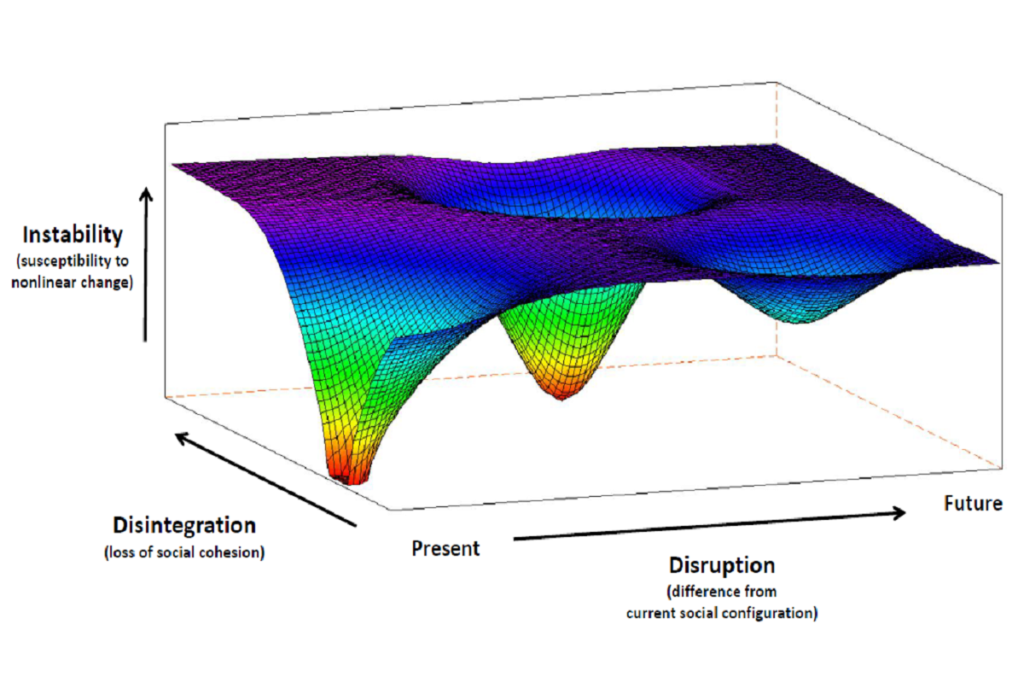
Getting to enough
Presentation by Thomas Homer-Dixon
A graphical illustration of the dilemma that’s destroying our world—and how we’re going to solve it.
A graphical illustration of the dilemma that’s destroying our world—and how we’re going to solve it.
Polycrisis.org: A hub for a the polycrisis community to converge on priorities for research and action.
A hub for the growing polycrisis community Read More »
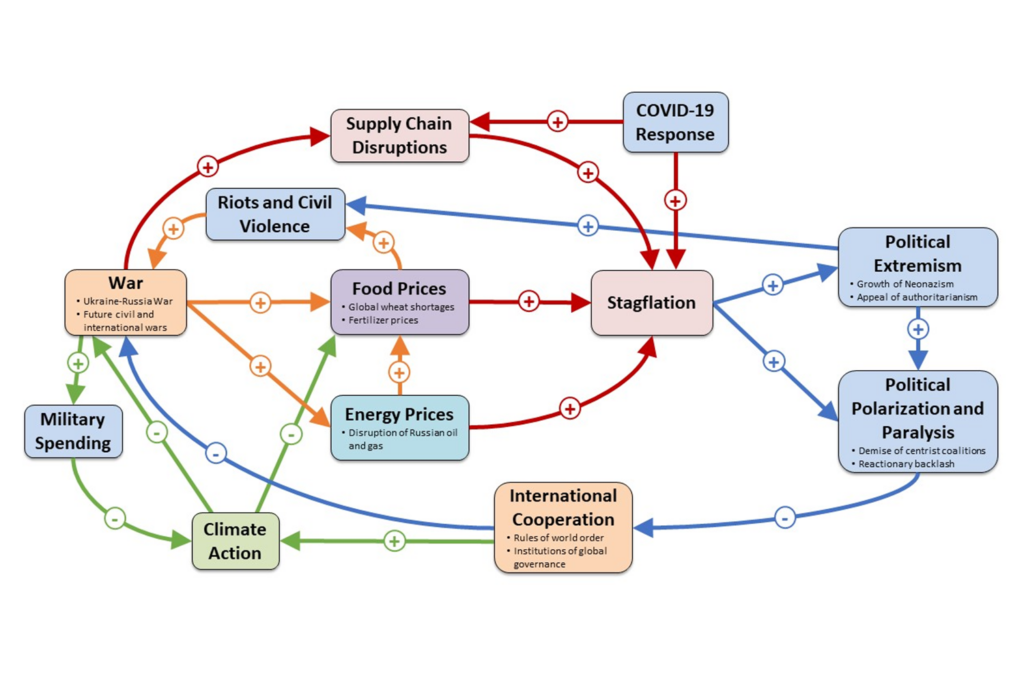
A systems diagram charting the knock-on effects of the Ukraine-Russia War — and the vicious cycles that are emerging from them.
Mapping the global systemic consequences of the Ukraine-Russia war Read More »
<h
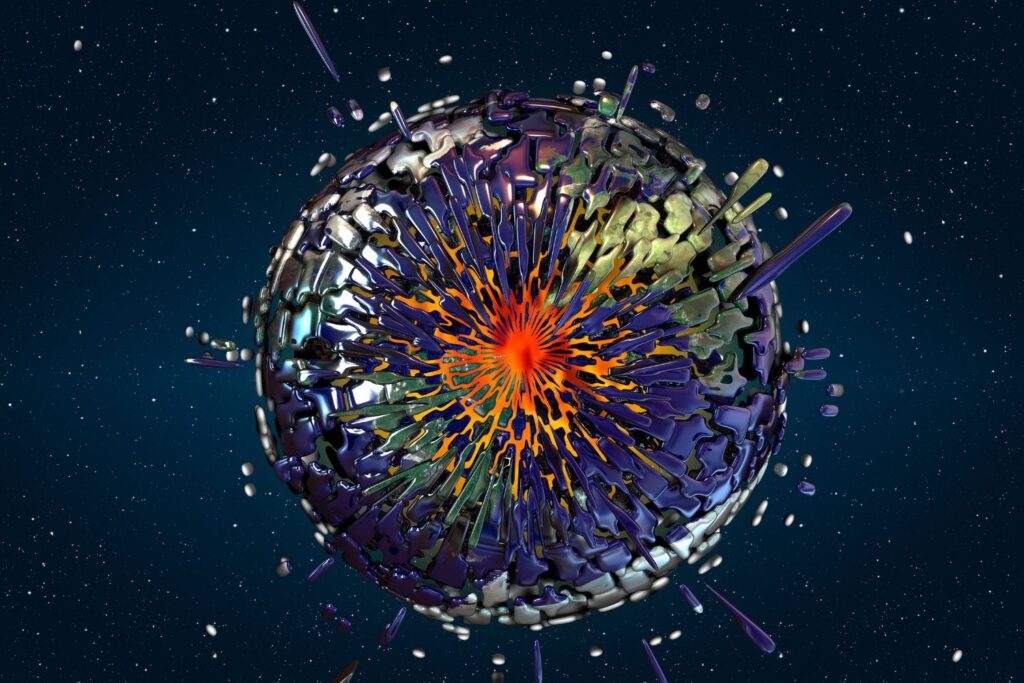
Today’s mess is best understood as a global polycrisis—a term which implies that humanity is dealing with a complex knot of seemingly distinct but actually deeply entangled crises.
What happens when a cascade of crises collide? Read More »
A discussion paper that argues that the concept of “global polycrisis” provides a useful framework with which to understand and address major problems afflicting humanity today.
What is a global polycrisis? Read More »

We need to improve how we marshal, integrate, apply and communicate the best knowledge about B.C.’s emerging risks – those known and anticipated, as well as those unexpected and even currently unimaginable.
The first briefing of the Ukraine-Russia War Expert Panel
The global systemic consequences of the Ukraine-Russia War: Part I Read More »

A paper calling for a research program to investigate this moment’s seemingly sharp amplification, acceleration, and synchronization of systemic risks.
A call for an international research program on the risk of a global polycrisis Read More »

This paper explores how recent advances in AI have re-opened questions around the feasibility and desirability of central economic planning. It presents a thought experiment about how an AI-directed economy might work, based on a powerful AI agent (whimsically named “Max”).
Max – a thought experiment: Could AI run the economy better than markets? Read More »
